

Thank you to Rune Storli (rus@dmmh.no), Professor in Physical Education and Health at Queen Maud University College of Early Childhood Education, Norway, for providing this post.
This article explores the Granåsen Nature Playground, built in Trondheim, Norway, in the autumn of 2024. The playground was designed using research-based principles and evidence about children’s play, learning and development and is owned by the Municipality of Trondheim. Outdoor play experts were involved in every stage of the project, from the initial landscape-architecture planning, to on-site construction with the building contractor, and finally by participating in a benefit–risk assessment carried out in accordance with ISO 4980:2023 Benefit–risk assessment for sports and recreational facilities, activities and equipment.
Many children growing up in the Western world today have limited daily contact with nature. Free play, where children spend time outdoors together during their leisure time, has gradually been displaced by digital and adult-organized activities. As a result, many children have little experience playing in natural environments.
Nature is widely regarded as both an exciting and enriching play environment for children. For curious and active youngsters, there is much to sense, discover, and explore outdoors. Research shows that children who spend significant time playing in nature develop better concentration, stronger motor skills, and tend to experience fewer health problems than their peers. Because natural environments and materials offer countless opportunities for creative play, they also provide varied surroundings in which children thrive and genuinely want to spend time.
Nature playgrounds located close to residential areas can therefore serve as an important public health initiative for children who seldom visit forests or natural landscapes. Such playgrounds may even inspire families to spend more time in nature more generally.
What characterizes a good natural play environment?
Two factors are particularly important for the quality of the play environment.
First, children must experience a high degree of freedom in choosing what to play with and with whom. Because children are impulsive and emotionally driven, it is essential that they are allowed to select their own activities. This supports intrinsic motivation and fosters the development of sustained attention and focus. During physically demanding activities, including various forms of risk-taking play, even very young children can become deeply involved in the moment.
Second, children must perceive their surroundings as rich in exciting and playable features. Young children are naturally explorative and inclined to push boundaries
because they do not yet have fixed ideas about what objects are for or how they should be used. They often do unexpected things and interact with their environment in creative ways. Nature is an excellent play environment precisely because it offers many affordances and lacks “instructions” for how loose materials such as sticks, cones, stones, water, and sand should be used.
How was varied play considered in Granåsen?
The target group for the Granåsen nature playground is children of preschool age and older, and the aim was to design an environment suitable for this age range. These children tend to be physically active and engage in gross motor play using their whole bodies. They are also highly interested in loose materials, which they incorporate into nearly everything they do. They love constructing, building, and leaving traces of their activity behind. Most of all, they want to play together with other children. For this reason, the environment must contain many “rooms” of different sizes—spaces suitable both for larger groups and small clusters of children.
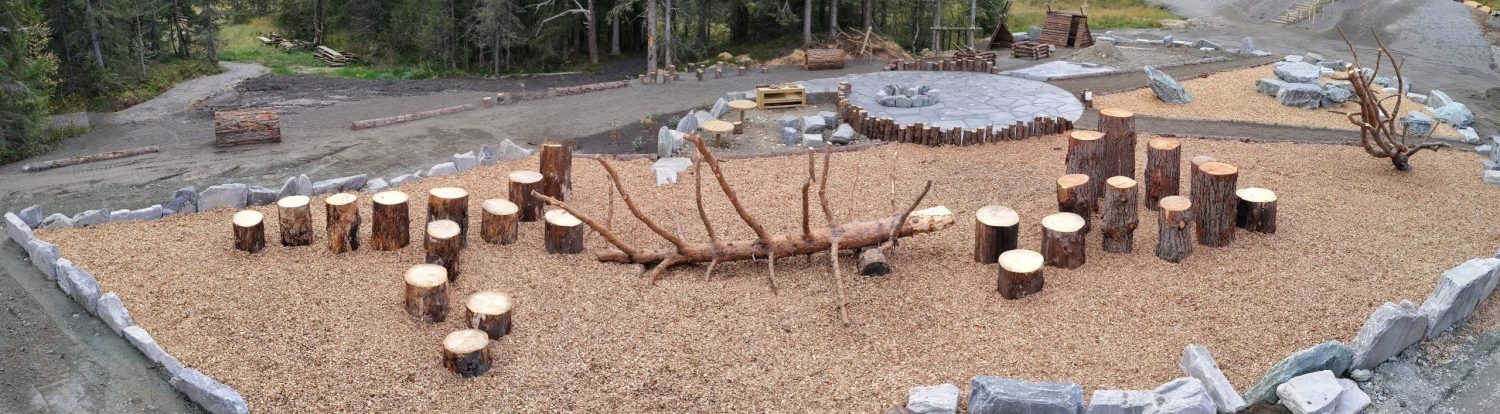
In Granåsen, the guiding principle was that all elements should be open for the children to define as ‘playable.’ The children should be able to choose for themselves how they want to use the environment, as long as it does not pose a significant hazard to themselves or others. Distinct zones were created to invite specific types of play and to prevent unnecessary interruptions to ongoing activities. The area with logs and trees primarily invites climbing and height-based risky play. “The Anthill” contains a mixture of rounded river stones, gravel, and sand. The nearby “Lumberjack Yard” consists of small huts, “pigpens,” and large logs designed to support both role play and construction play.
“The Wolverine Den” consists of large boulders that children can climb on or crawl under, and it is intentionally not coded for any particular type of play, allowing children to invent their own uses. The stone edging that defines the boundary of the playground functions as a continuous obstacle course and contributes to the sit e’s distinctive identity (e.g. a miniature of Rocky Mountains).
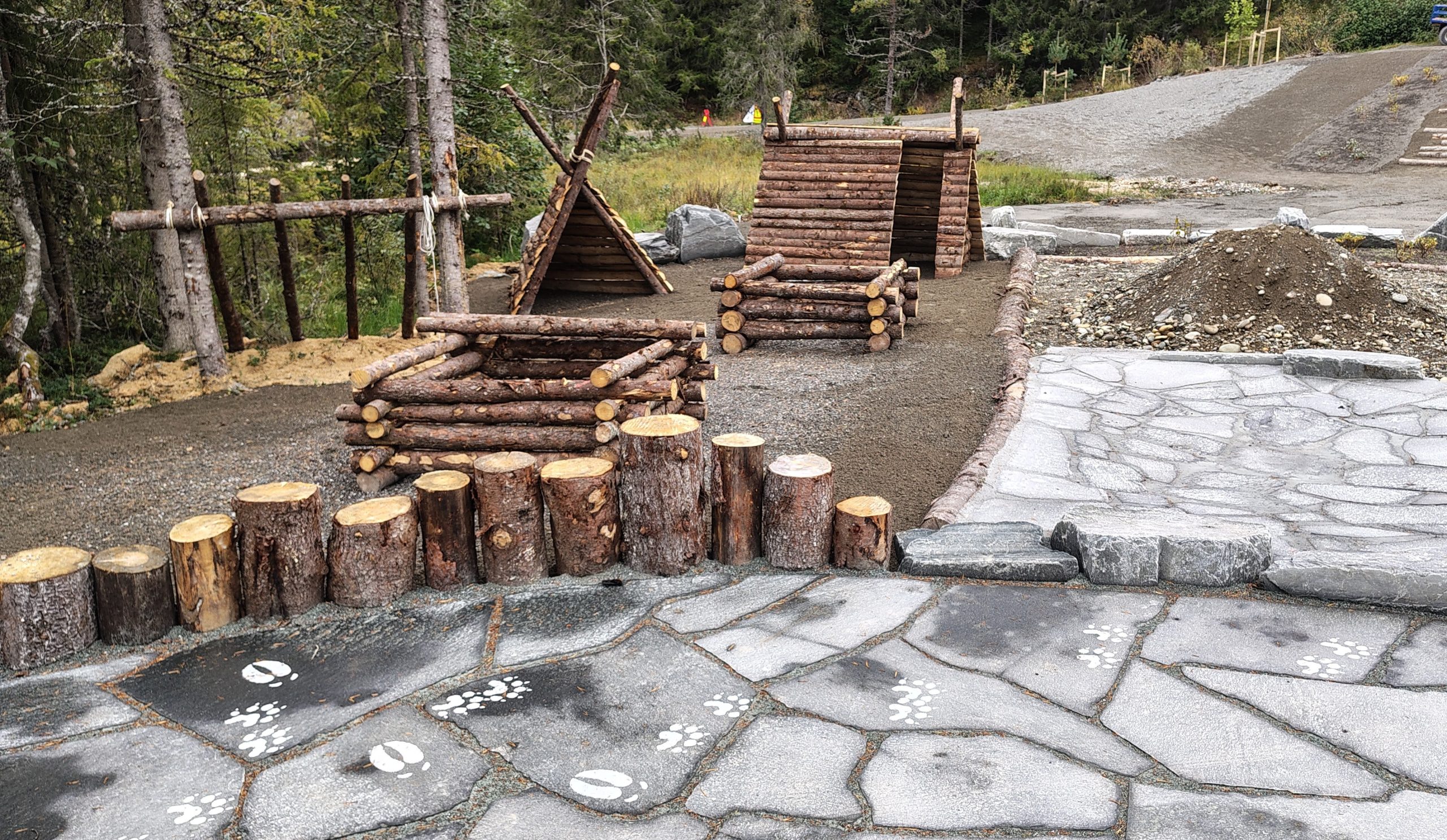 The Lumberjack Yard and the Anthill
How have the children received the Granåsen nature playground?
To gain a deeper understanding of how children engaged with the newly developed environment, I followed a preschool group of 3–5-year-olds over four days at the site. Observations were carried out over a two-week period in October 2024. In addition, a preschool teacher who knew the children well recorded an audio log after each visit, summarizing her impressions. The aim was to observe how free play developed over time and which activities the children repeatedly returned to.
On the first day, the teacher described the children as scanning and exploring the area, moving throughout the natural playground. Much of the initial activity involved climbing and balancing on stones and logs. Younger children seemed to spend more time in this exploratory phase than older ones. The teacher noted that the open layout enabled even the more cautious children to move about freely.
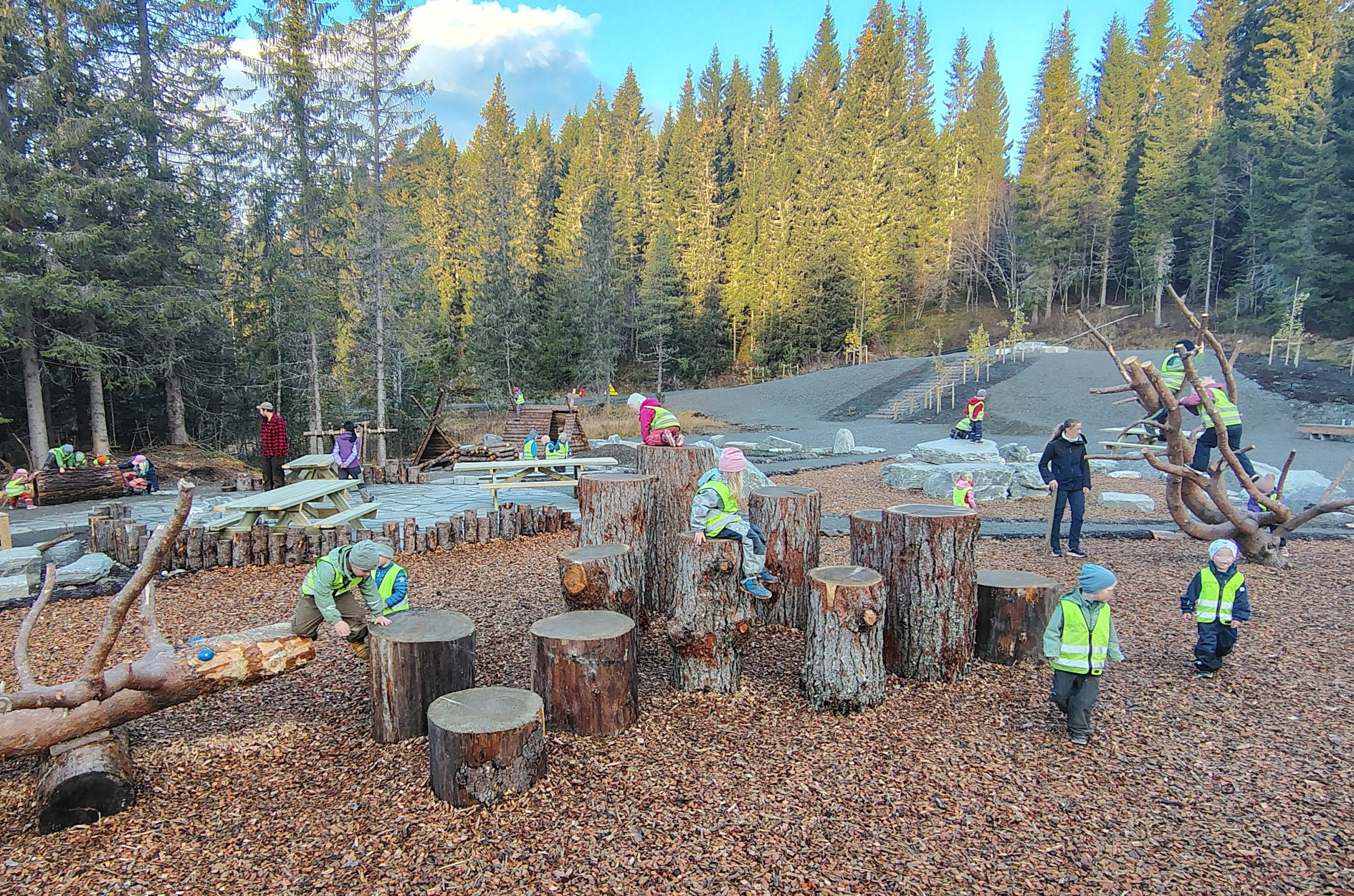
As the day progressed, smaller play-groups emerged. Older children gravitated toward the play huts and pigpens in the Lumberjack Yard, where role play began to develop. Younger children moved around the site, some around the boulders in the Lumberjack Yard, others in the surrounding areas and many became very engaged in collecting stones from the Anthill. At the end of the day, when asked what they liked best, most children struggled to choose because they had enjoyed everything. One boy, described as somewhat cautious, proudly reported that he had jumped from the highest stump.
On the next visit, the teacher noted that the children were excited to return and spent significantly less time exploring. More time was spent on active play. The climbing tree remained popular, and children were frequently seen on the rooftops of the play huts.
Lava play, moving around the area without touching the ground, became popular. Everything that could be stepped on was used: boulders, embedded logs, the stone edging obstacle course, tall stumps, and natural rocks. This was possible because all elements were within jumping distance for average 3–5-year-olds.
The role play that began in the Lumberjack Yard on the first day resumed quickly and developed further. Children used loose materials such as logs, sand, and stones to transform the fixed pigpen into a lion cage with a roof, while stones from the Anthill became “lion food”. This imaginative role play continued throughout most of the day.
“The Wolverine Den,” which had been used sparingly on the first day, became increasingly popular. Its structure allowed many children to play simultaneously; on top of, under, and between the stones. The cave itself was not discovered until several days later, but once the children realized its potential, they spent long periods playing there.
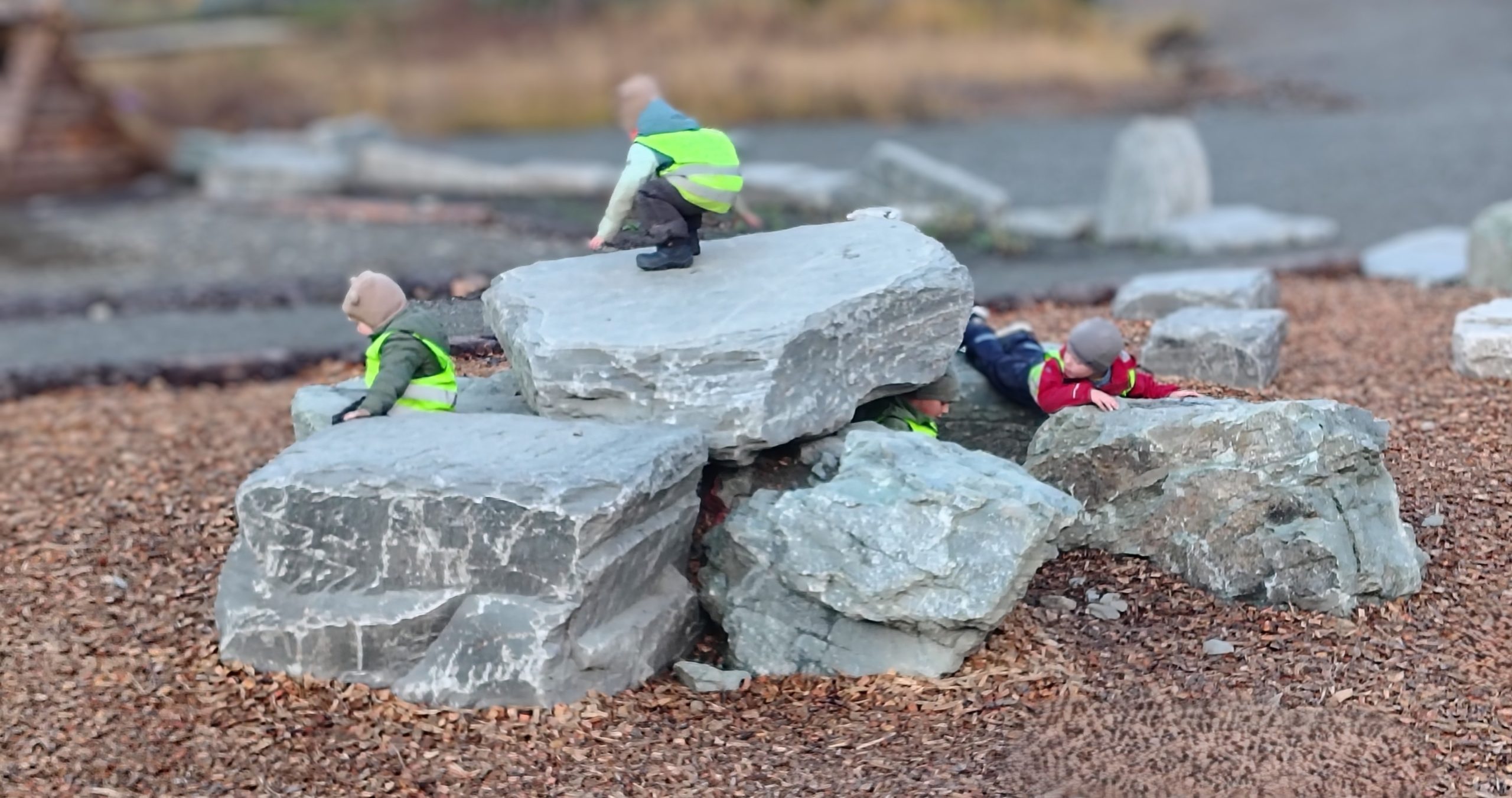 The Wolverine Den
Final reflections
The preschool children taught me several things. First, the most visually striking features are not always the most enduringly engaging. The stumps and climbing tree were explored immediately, but they did not support long-term play. Elements focused solely on physical or motor challenges can quickly become boring, likely because they do not afford sufficient difficulty or variation over time. When children feel that they have mastered an element, they begin seeking new challenges—often by using the environment creatively to increase difficulty, excitement, and the sense of risk mastery.
The children also demonstrated how important it is for a play environment to allow them to shape and create something themselves. The most sustained and evolving play occurred in areas with varied ground surfaces; gravel, sand, soil, and forest floor, where children found loose materials, dug, and moved masses around. A rich supply of diverse loose materials is undoubtedly the most important ingredient for fostering creative and enduring nature play. Loose materials also play a crucial role in collaborative and imaginative play: a stick can become a sword, a magic wand, a kitchen utensil, or a toy animal; a stone can become a bowl, a dinosaur egg, or animal food.
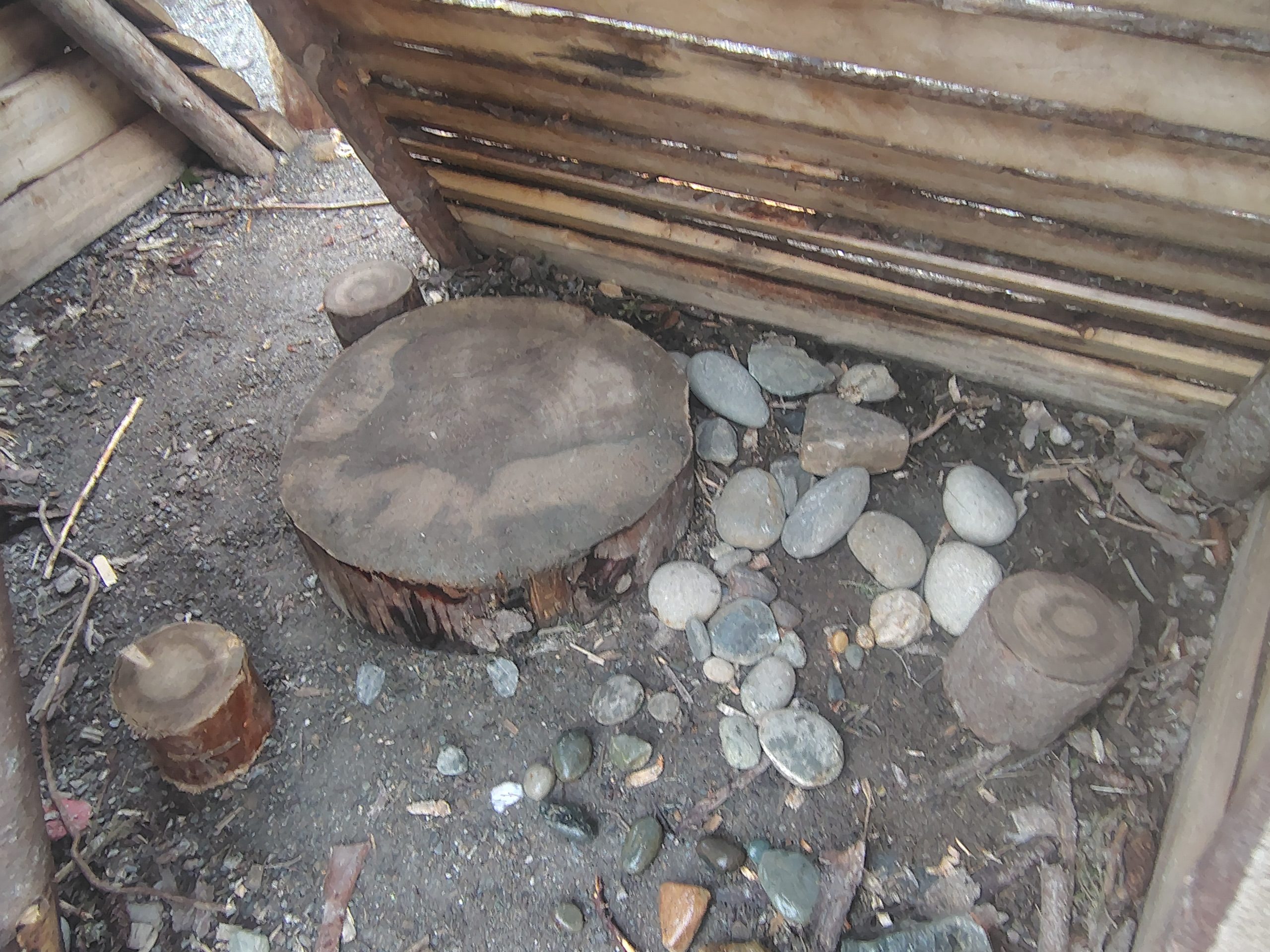 Traces of play…
Building a nature playground can never fully replace the variety of challenges and opportunities that a high-quality natural environment provides. However, experiences from Granåsen clearly show that children seek variety in their play. Many children look for excitement and physically challenging activities, but they also want to construct, create, and engage in imaginative role play. Therefore, nature playgrounds must avoid focusing too narrowly on physically demanding elements and should instead support a broad range of play types that allow children to be creative and collaborate with others.
Appendix
It has now been one and a half years since the Granåsen Nature Playground officially opened. Reports indicate a high number of visitors and extensive play activity on both weekdays and weekends. Early Childhood Education and Care institutions, as well as primary schools in the surrounding area, visit the site regularly during the day, and many groups even travel by bus to spend time at the playground. To date, no injuries have been reported in connection with children’s play at the site. Notably, all the natural materials used in constructing this playground are also readily available in Canada.
An article about this playground was published in Park & Anlegg architecture journal (available in Norwegian only). Access that article here: https://parkoganlegg.no/nyheter/anlegg-uterom/granasen-naturlekeplass-en-rik-kilde-til-lek/
Rune Storli is a Professor of Physical Education and Health at Queen Maud University College of Early Childhood Education (DMMH) in Trondheim, Norway. Throughout his long academic career, he has established himself as an expressive scholar in research on children’s play environments, particularly within the early childhood sector. In addition to his scientific publications, Storli has authored numerous articles aimed at communicating research-based knowledge on outdoor playgrounds, benefit–risk assessment, and the importance of diverse and stimulating play environments. Through his combination of research expertise and extensive practice, he is an influential voice in shaping the knowledge base for high-quality play environments and in promoting children’s opportunities for meaningful, challenging, and safe play.
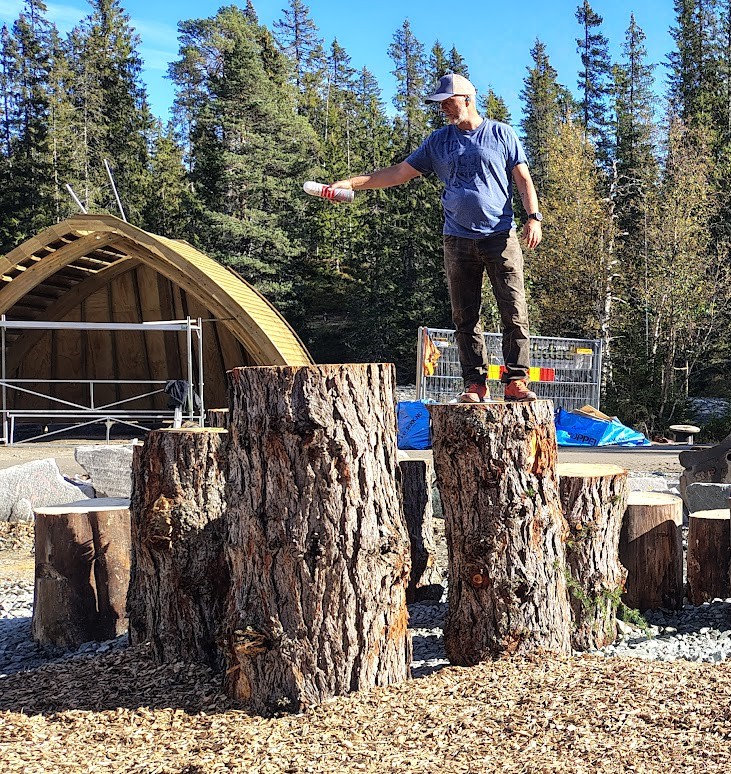 The author during the construction of the playground.