
Trail Blazers: King’s University College is implementing a Forest School Pedagogy and Practice course in the Childhood and Youth Studies Department.
Thank you to Laurel Donison (Lecturer) and Marlene Frederick (Kindergarten Teacher and Forest School Course Instructor) with King’s University College at Western University for providing this post.
Trail Blazers: King’s University College is implementing a Forest School Pedagogy and Practice course in the Childhood and Youth Studies Department.
A new trail is being blazed at King’s University College, bringing children and post-secondary students into the woods to play, learn, and grow together.
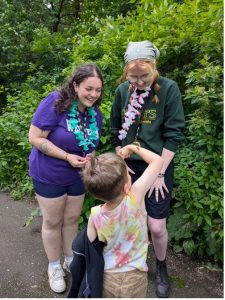
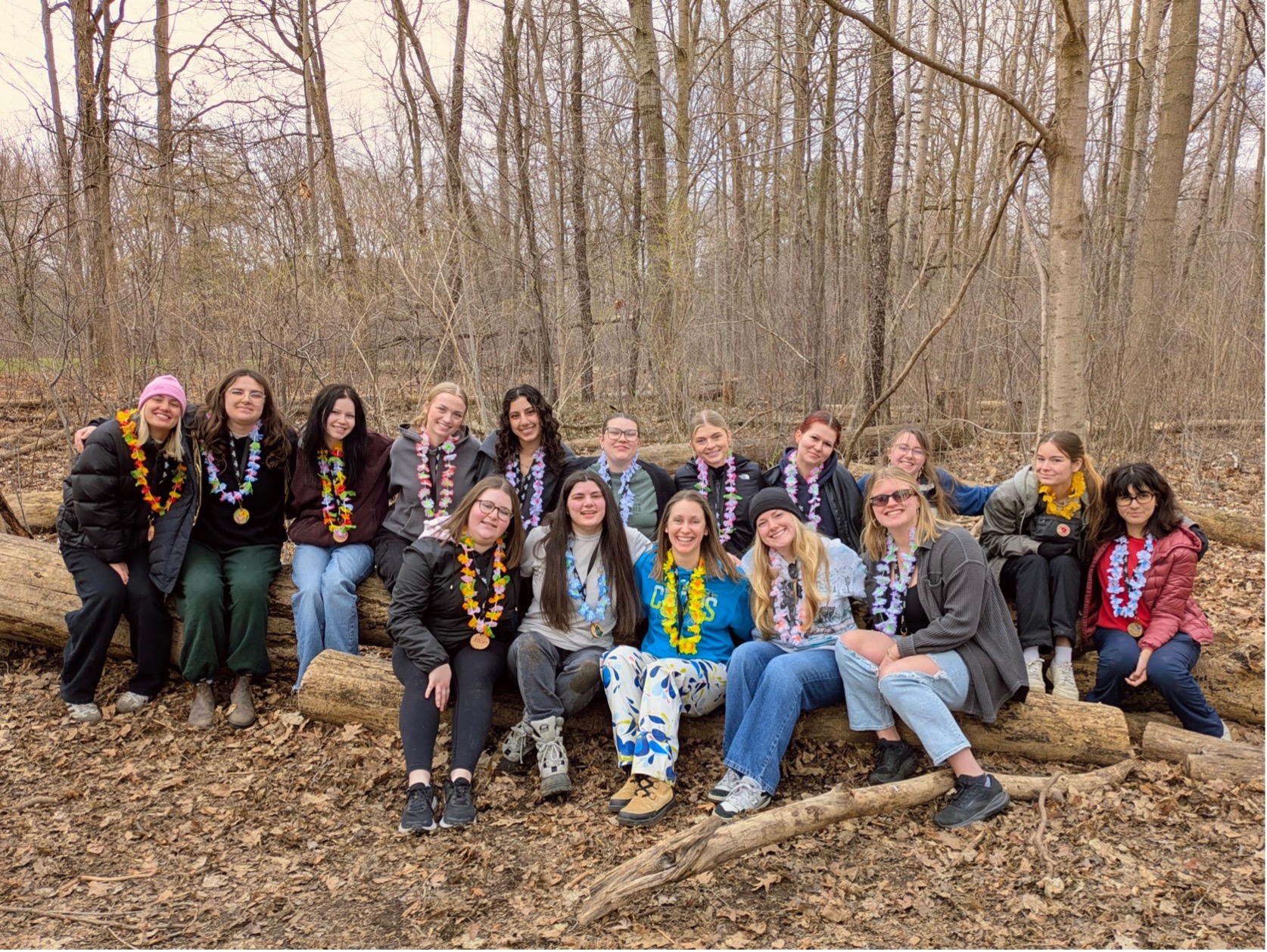
Forest School Practice and Pedagogy is a new and unique course offered at King’s University College at Western University through the Childhood and Youth Studies program. King’s University College in London, Ontario is located on the traditional lands of the Anishinaabek, Haudenosaunee, Lūnaapéewak, and Chonnonton peoples. Students in this course support kindergarten classes in a public school during weekly visits to a local forest. Through this hands-on experience, they deepen their understanding of outdoor play and education by learning alongside young children, while building relationships and contributing to the school’s outdoor education program. This experiential approach connects practice with theory, as students explore key concepts in Forest School and Nature Pedagogy through readings, discussion-based seminars, reflective journaling, and conversations with guest speakers.
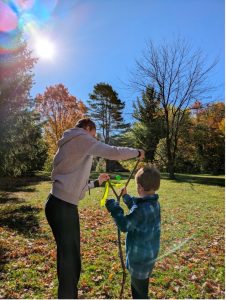
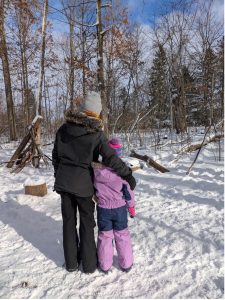
On a forest school day, a bird’s-eye view of the woods might reveal children building forts from fallen branches, carefully turning over rocks in search of insects, creating clay faces on trees, or laying sticks across muddy patches as they explore what’s new at the pond. Others may be balancing on logs, climbing trees, or hopping over small streams, all supported by the guidance, encouragement, and friendships growing between university students and kindergarten children. The joy and connection that children feel in this program is best shared in the words of a kindergarten student:
“The best part of forest school is that the volunteers come and we get to play in the forest. I like finding all the flowers and learning the names. It’s important to learn about nature and learn about animals. When I’m out in nature I feel breezy and my heart feels kind because I can feel a little sun and a little shade. And the volunteers make me feel happy because they play with us. Forest school is amazing!” (Rainbow, age 5)
King’s students are active contributors to the program, bringing their own skills, experiences, and enthusiasm for helping children learn and connect with nature. Children have plenty of support to investigate their own wonderings, share observations, and challenge themselves to try new things. For example, when a group of children wanted to launch pinecones using a bungee cord, King’s volunteers helped them problem-solve and engineer slingshots using exercise bands and sturdy Y-shaped branches. The students also pay close attention to the children’s interests and often return with materials and ideas to extend their learning. One student who works at a climbing facility brought a climbing rope and taught the group how to secure it to a low branch, creating a rope swing adjusted to a height where children could use it independently. Others bring songs, scavenger hunts, books, and materials for nature-based crafts.
King’s students often express that their experiences in the forest school program have a meaningful impact on how they envision their future work with children. They share that the program helps to grow their understanding of outdoor play, as well as bridge theory on childhood and education, including the value of child-led learning, inquiry-based experiences, risky play, working with children with special needs, and the importance of advocating for meaningful opportunities for children to learn outdoors. Many students describe their intentions of carrying these perspectives forward into their future careers as educators or other work with children, as one student reflects:
“Each week in the forest showed me how powerful risky play and child-led learning can be when adults step back and let children step forward. These past few months have changed the way I think about learning, capability, and my future role as an educator. What I witnessed was not simply outdoor play; it was children discovering themselves through curiosity, challenge, and choice.” (Kaitlyn, CYS Student).
The collaboration between King’s and the elementary school has been impactful for university students and kindergarten children alike. A parent of an enthusiastic kindergarten student expressed her gratitude to the King’s volunteers in a heartfelt note, writing:
“As an active boy and a younger kindergarten student, the transition to school came with some challenges. Forest School gave him an outlet for his energy, but even more importantly, it gave him chances to experience success and build confidence. In this setting, his curiosity, creativity, and problem-solving skills come through in ways that are not always as visible in other learning environments” (Kate, mother of kindergarten student).
As the program continues to take root and grow, the faculty at King’s is excited to offer this course for a second year and also to include students in Disability Studies. The King’s Forest School course is a highlight of the kindergarten experience for both the children and educators at the elementary school, and it is also an enriching part of the university experience for King’s students, providing an authentic opportunity to bridge theory and practice. Through hands-on learning, the course plants seeds for students’ future work and practice with children. King’s is proud of this opportunity and enthusiastic about seeing the continued growth of this program in the upcoming school year.