
You must enable JavaScript to view this website.

Research

Have you ever wondered how much daily weather conditions can actually impact physical activity levels in children and on which days of the week the impact is more prominent? To date, there is strong evidence that moderate-to-vigorous physical activity is associated with many health benefits in childhood. In Canada, insufficient physical activity in children remains...

Play Outside NS shares a common goal of promoting, facilitating and communicating the importance of outdoor play in the early years, to foster health and well-being. In July and August 2019, they hosted “Summer to PLEY” (Physical Literacy in the Early Years), a series of knowledge sharing events showcasing work from the PLEY project. They...

These days the primary goal of most home buyers is to maximize the size of their home, even if it sacrifices outdoor yard space. But how does this affect our children’s outdoor play? A recent Australian study published in Public Health Research & Practice, titled “Associations between the home yard and preschoolers’ outdoor play and physical activity,” discusses...

Outdoor play is increasingly recognized as a foundation for children’s healthy social, cognitive, emotional and physical development. As such, outdoor play has now been added to the Encyclopedia on Early Childhood Development, where experts have weighed in on 9 outdoor play related topics from play-based learning to designing cities to support outdoor play. The chapter recognizes the...

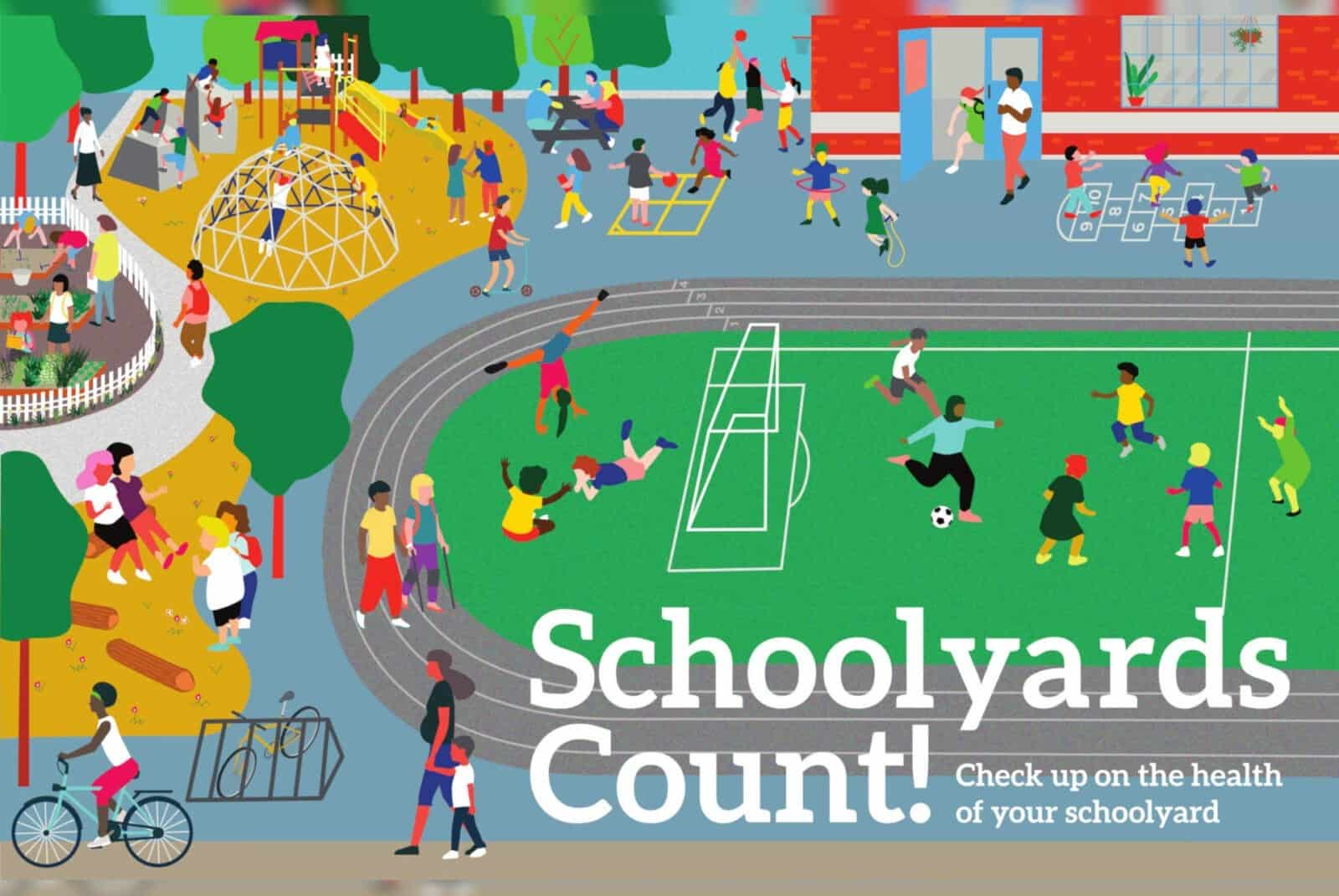
During the school week, children and youth spend half their waking hours at school. Schools share the responsibility for making sure students get outside and get active during those times. Alongside instruction and programs, the built and natural environment of the school makes a difference for students’ health. Schoolyards Count! is a citizen-science project.  A researcher...

The Canadian Public Health Association recently released a toolkit composed of infographics, research summaries, decision-making tools, promising practices, and a discussion document. The toolkit provides excellent resources and information on the importance of unstructured play, how to develop policy to facilitate play within schools and communities, and current research in the field of risky play....

More and more parents, practitioners, teachers, and researchers are interested in how nature can be beneficial for children as place to learn,play, socially interact, and become connected. A growing body of research published in the last decade shows promising results that regular classes in natural green environments (e.g. EOtC  – Education Outside the Classroom) can...

Nature Canada, a national charitable organization has released a report titled Screen Time vs. Green Time” The Health Impacts of too much Screen Time exposing the negative impacts of screen time on Canadian children and providing suggestions to guide children away from screens, and towards nature. Report highlights and findings In an article summarizing the Screen Time vs. Green...

As we continue to understand the benefits of outdoor active play, and the consequences of screen time, research is expanding to explore the influence of outdoor play and screen time on specific areas of children’s health and development. A recently published study in PLOS ONE titled “Cross sectional associations of screen time and outdoor play with social skills in...